The Basics of a Hormonal Cycle
The Why
Welcome to "The Things We Didn't Get To," where we dive into the topics that might not be fully explored during a typical appointment time. How much do you know about your cycle? Today, we're exploring the basic of hormones and the 28 day cycle. This is intended to be a quick overview and future posts may further dive into the science behind specific hormones and mental health. Let’s talk about the hormonal shifts that can occur naturally for females assigned at birth (AFABs).
The Info
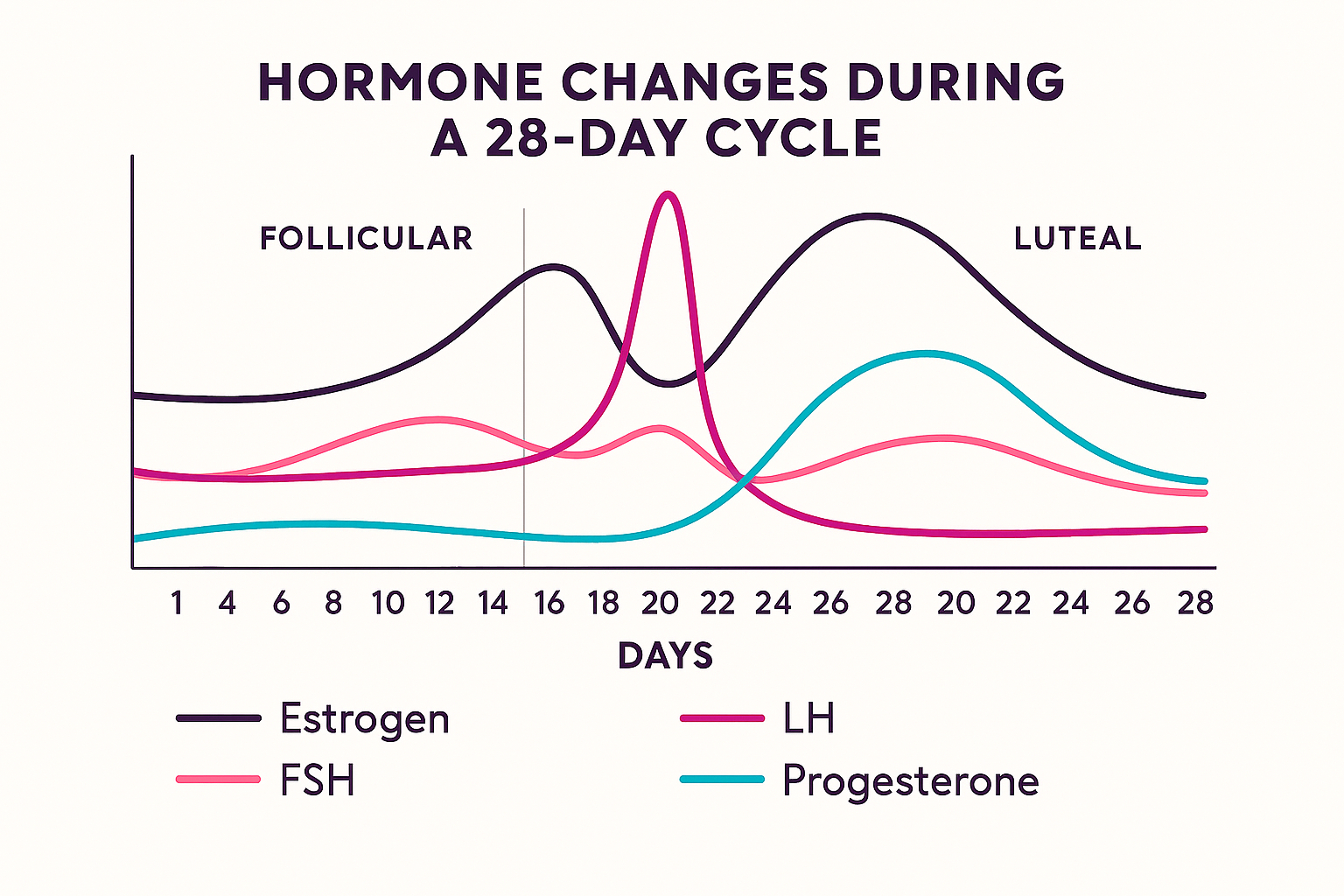
Typical monthly cycles last anywhere between 21 and 35 days with the most referenced cycle being 28 days. Within a typical 28 day cycle, there are three phases (stay with me). The first phase is roughly 14 days and is called the Follicular Phase. This is the phase where an FAB grows follicles stimulated by FSH (follicle-stimulating hormone); in turn, these follicles produce estrogen which increases over the 14 days. Your Ovulation Phase occurs somewhere between day 11 and 21 during average cycle, often around day 14. During that phase, your LH (luteinizing hormone) will surge to trigger ovulation. The last half of your cycle is the dreaded Luteal Phase. During this phase, estrogen initially increases slightly but then plummets around day 21 unless pregnancy occurs. Progesterone increases around day 21and then drops rapidly the last 7 days of your cycle. This induces the shedding of the lining in the uterus (ie menstruation). Day 1 of your cycle is actually the first day of menstruation and restarts the Follicular phase.
Discussion
The importance of hormones has been discounted in the field of medicine and vastly under studied. Hormonal testing is not widely utilized or refined which leave people to guess about the state of their hormones, even when the cycle is irregular. Hormones have implications on mental health presentations in disorders like ADHD. Antidotally, ADHD symptoms often worsen during the luteal phase, especially right before menstruation, even when treated with ADHD medications. This can present with increased mood lability, insomnia, impaired focus and executive dysfunction. There are options to better navigating the role of hormones in mental health. I often refer out to Naturopathy for further hormonal testing and management. I generally also recommend tracking cycles (through temperature changes), adjusting current medications broadly or just during the luteal phase or even adding a medication depending on the specifics of the case. If there is anything you take away from this blog today, talk to your mental healthcare team about your cycle and the possible mental health implications.
ADHD Quick Takeaways
The average menstrual cycle is tracked on a 28 day span but can vary within 21-35 day span
Different phases are associated the increase and decrease of various hormones
The Luteal Phase is often a time associated with worsened mental health symptoms associated with a sharp decrease in estrogen and progesterone around day 21.
Hormones are not well studied and testing is not well established in the field of medicine. A naturopathic provider may be a good resource to turn to.
Tracking your cycle, symptoms and making medication adjustments can also be helpful.
Talk to your mental healthcare provider about your cycle, symptoms and patterns.
Disclaimer
This blog is intended for informational and educational purposes only. It does not constitute medical advice, diagnosis, or treatment. Please consult with a licensed medical or mental health professional before making any changes to your care, medications, or treatment plan. Every individual’s mental health journey is unique, and personalized guidance is essential.
Terms
AFAB-Female assigned at Birth, referring to sex not gender